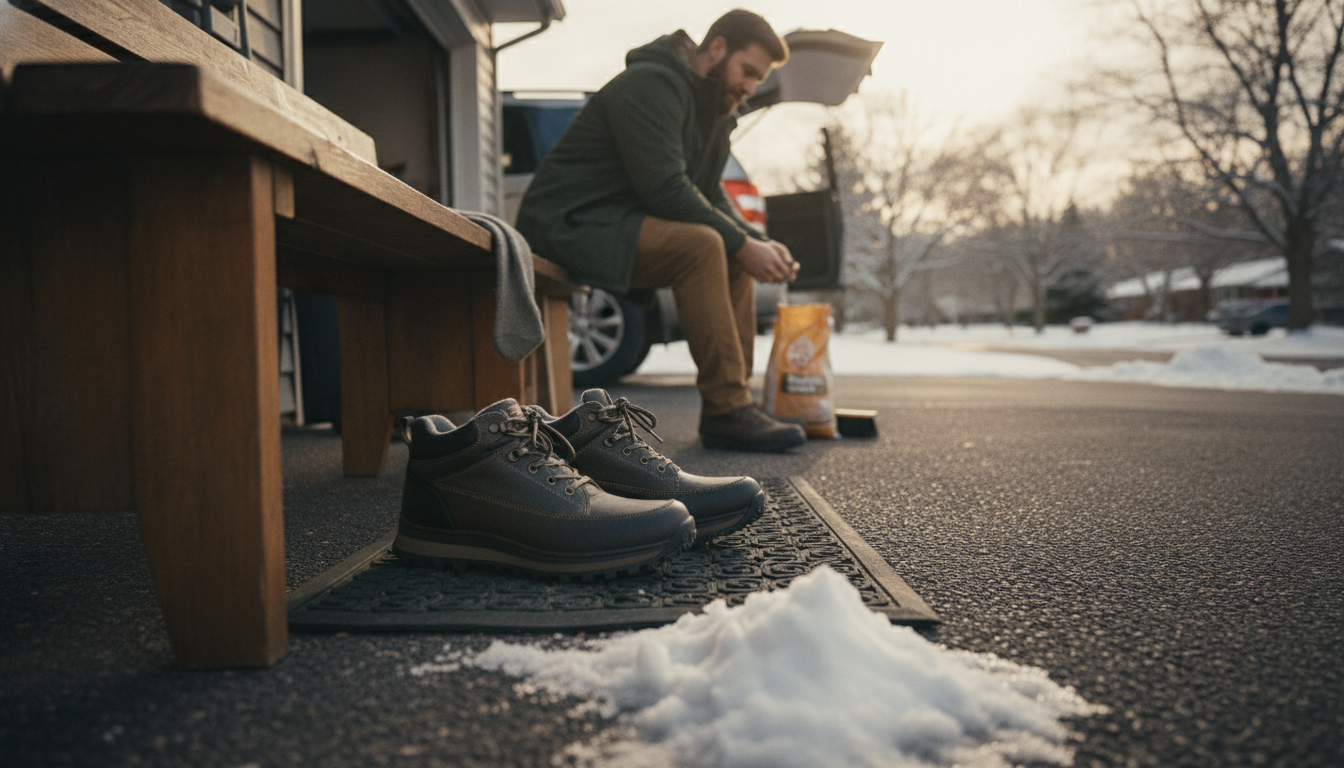
Winter sneakers for men should prioritize traction, water resistance, warmth, and easy cleanup. The best choices are sneakers made with weather-ready materials (treated leather, Gore-Tex, coated canvas, or rubberized uppers) paired with a grippy outsole that can handle wet sidewalks and light snow. A slightly higher collar helps keep slush out, while a roomier fit makes space for thicker socks without cutting off circulation.
Leather and suede can work well in cold weather if they’re properly treated. Look for sealed seams, fewer mesh panels, and a finish that repels water. If the forecast is consistently wet, a waterproof membrane (or a sneaker built specifically for rain and snow) keeps feet comfortable longer than sprays alone.
Outsole grip matters more in winter than in any other season. Choose deep lugs, multidirectional tread, and rubber compounds designed for cold temperatures. Flat, minimal outsoles can feel fine indoors but often get slippery on wet tile, icy patches, and salted pavement.
Insulated linings, fleece interiors, and thicker insoles add warmth, but breathability still matters to avoid sweaty feet. A practical setup is a lightly insulated sneaker with merino wool socks—warm, odor-resistant, and better at regulating temperature than cotton.
For everyday outfits, leather sneakers in black, charcoal, or dark brown hide winter grime and pair easily with jeans, chinos, or joggers. In slush-heavy cities, consider hybrid sneaker-boots or trail-inspired sneakers: they keep a sneaker look while adding lug soles and more protective uppers.
For specific winter-friendly picks and styling ideas, see the full guide here: https://couturebay.shop/what-sneakers-to-wear-in-winter-for-men/.
Clean and dry the shoes first, then apply a water-repellent spray or wax suited to the material (leather, suede, or canvas). Let it cure fully, and reapply every few weeks or after heavy rain/snow exposure.








Leave a comment